In Harry Potter and the Philosopher’s Stone the author J.K. Rowling used the name Nicolas Flamel for a venerable old wizard who plays a pivotal role behind the scenes. However, Rowling did not simply make up this name: the real Nicolas Flamel and his wife Pernelle were two historical characters in medieval Paris. Flamel’s unusual épitaphe (memorial stone) is one of the star items in a new exhibition entitled Nicolas Flamel, alchimiste de papier, which is held at the Musée national du Moyen Âge (formerly Musée de Cluny) in Paris until 24 January 2027: https://www.sortiraparis.com/en/what-to-visit-in-paris/exhibit-museum/articles/339814-nicolas-flamel-paper-alchemist-the-character-reveals-himself-in-the-cluny-museum-s-exhibition.
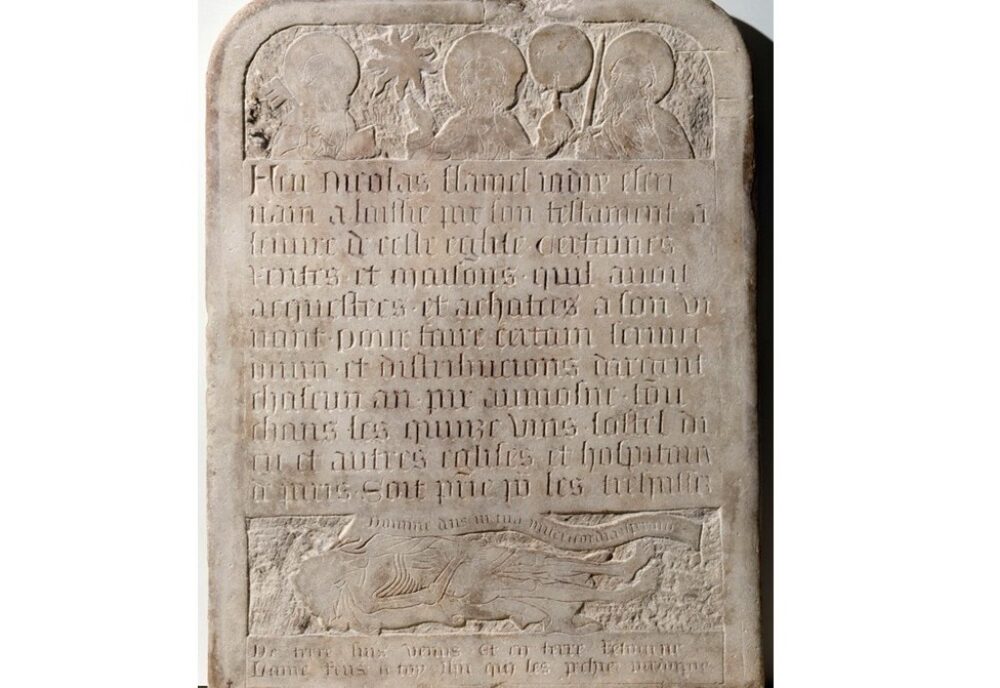
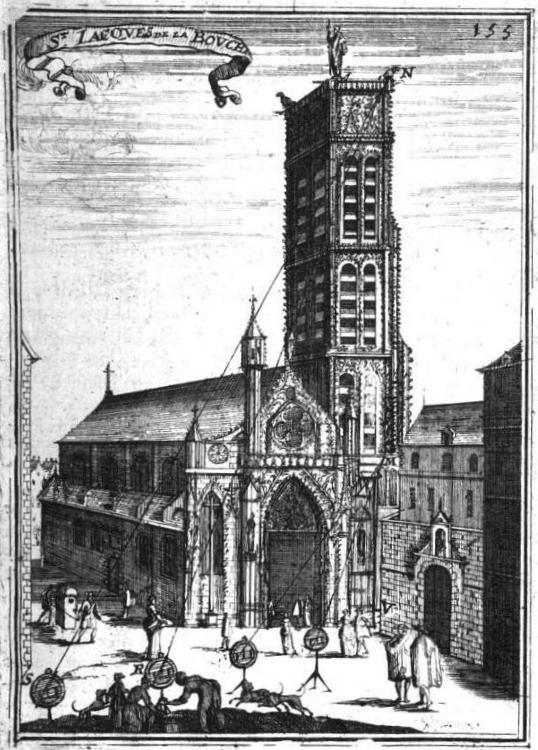
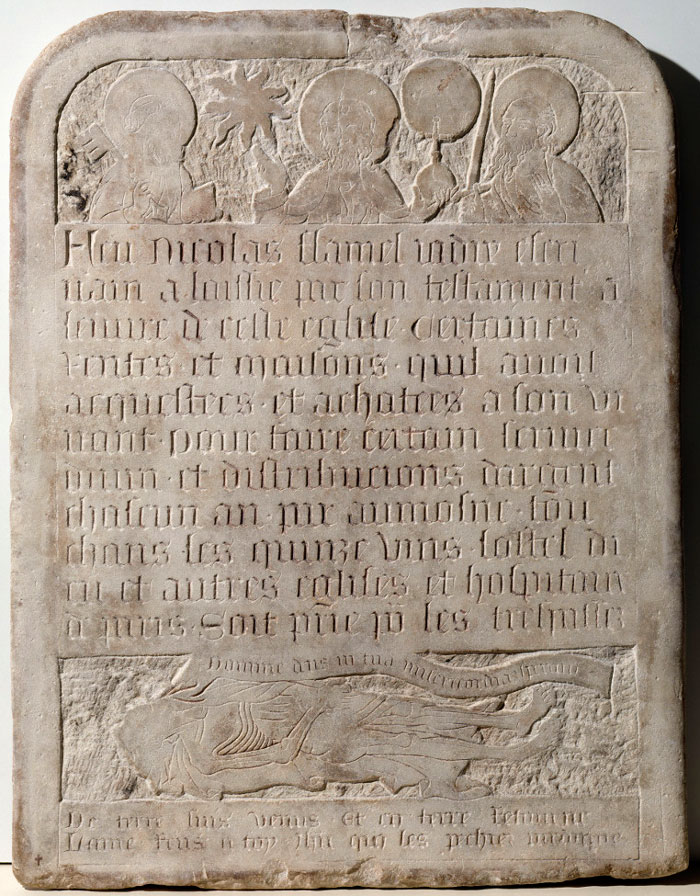
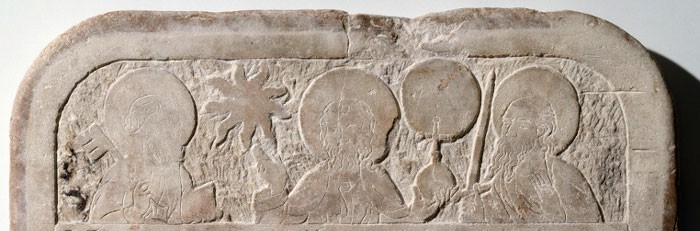
According to the terms of his will, the memorial plaque of Nicolas Flamel (1330/40–1418) was originally placed above his tomb in the church of Saint-Jacques-de-la-Boucherie (St James of the Meat Market) in central Paris of which only the sixteenth-century Tour Saint-Jacques survives today (fig. 1). The plaque disappeared in 1797 during the demolition of the church until it reappeared and entered the collections of the Musée de Cluny in 1844 where it quickly became a centrepiece (fig. 2). The stone is 58 cm high, 44.5 cm wide and 3.8 cm deep. It features at the top the half-length figures of St Peter with his key, St Paul with his sword, and in the centre between the sun and the moon Christ as the Salvator Mundi holding a globus cruciger (cruciferous orb) as a symbol of power and authority in his raised left hand (fig. 3).
Flamel was a public scribe, copyist, and escrivain (writer). His career may have begun at the nearby cemetery of the Holy Innocents in one of its charnel houses, the so-called charnier des écrivains (writers’ charnel house), for the cemetery was a bustling place of commerce. After becoming a sworn bookseller to the University, and following his advantageous marriage around 1370 to a widow named Pernelle (d. 1397), Flamel devoted his fortune to good deeds. The couple had no children.
Above all, Flamel used numerous real-estate investments towards his salvation and lasting memory. His donations included purchases, renovation work and embellishments on behalf of religious houses and charitable institutions. At his death on 22 March 1418 his significant real-estate portfolio made him a reputable burgher of Paris and a major benefactor of the church: an achievement that would later fuel suspicions and posthumous legends about his having been an alchemist.
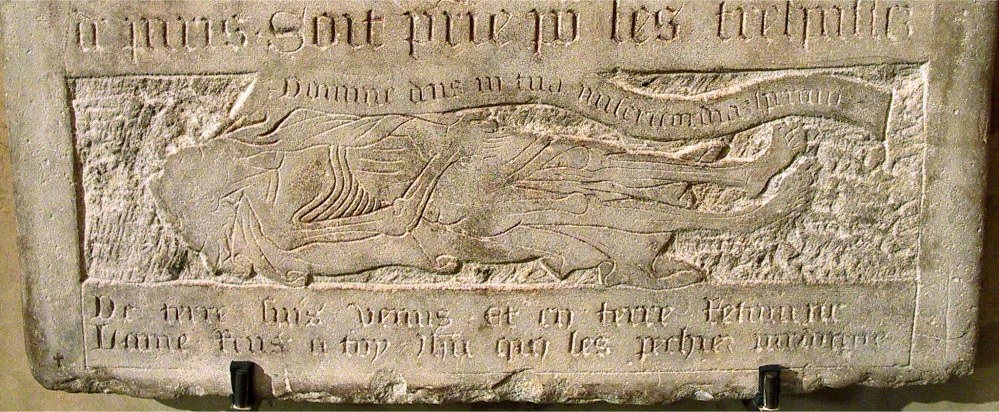
Far removed from the alchemical legends attached to his name, Flamel’s memorial plaque is testimony to the life of a Parisian burgher who experienced a remarkable social ascent. The lengthy inscription and the taille d’épargne image of a recumbent cadaver below also reflect the tension between glory and humility, the rise of an assertive learned bourgeoisie, and the penitential tension that was at its peak at the end of the Middle Ages. In a rather conventional manner Flamel’s epitaph recalls his good deeds, and thus his wealth and social success. The French inscription in incised Gothic letters reads:
Heu Nicolas Flamel iadix escri-
uain a laissie par son testament a
leuure [i.e. l’œuvre] de ceste eglise certaines
rentes et maisons quil avoit
acquestees . et achatees a son vi-
uant . pour faire certain seruice
diuin. et distribucions dargent
chascun an . par aumosne . tou-
chans les quinze vins . lostel di-
eu et autres eglises et hospitaux
de paris . Soit prie pour les trespassez
(Translation: Alas! Nicolas Flamel, formerly escrivain, has bequeathed in his last will to the fabric of this church certain annuities and houses that he acquired and bought during his lifetime for the purpose of performing certain divine services and distributing money annually as alms to the Hôtel-Dieu and other churches and hospitals of Paris. Please pray for the departed.)
The Latin text on the banderole above the recumbent cadaver reads:
Domine dominus [sic] in tua misericordia speraui
(Translation: Oh Lord, Lord, in your merciful love I have placed my trust.)
Along the lower edge of the plaque are two more engraved lines in French:
De terre suis venus . Et en terre retourne
Lame rens a toy Ihesu qui les pechiez pardonne
(Translation: From earth I came and to earth I return. My soul I surrender to you, Jesus, who forgives sins.)
The epitaph thus concludes with an expression of Christian hope and an appeal to divine mercy, which is also conveyed by the emaciated, almost skeletal cadaver stretched out below that alludes to the resurrection as in Job 19: 25–27 (fig. 4). This particular type of macabre representation, also known as a transi, is quite an early example since the earliest known cadaver effigy carved in the round in France is believed to be that of Guillaume de Harcigny (d. 1393), physician to Charles VI, which featured as an earlier Monument of the Month: https://churchmonumentssociety.org/monument-of-the-month/cadaver-monument-of-guillaume-de-harcigny-d-1393-musee-de-laon-france. The head of the corpse is thrown back as if in complete abandonment. The right arm is laid across the body while the hand rests on the left hip and appears to hold a piece of the shroud that covers the genitalia: a conventional gesture of modesty.
Such funerary vanitas imagery was an unusual choice among kings and queens, clergymen, nobles but also the bourgeoisie, as here on Flamel’s memorial. Why did they choose such a macabre and – for the period – relatively avant-garde image? The explanation may lie in the climate of anxiety generated by the many misfortunes that struck Paris from the end of the fourteenth century on, such as the recurrent bouts of madness of the king, the civil war between the Armagnacs and the Burgundian, and the conflict between the ascetic morality of the church and the emergence of rationalism and more secular values championed by the nobility, but undoubtedly echoed by a burgeoning bourgeoisie.
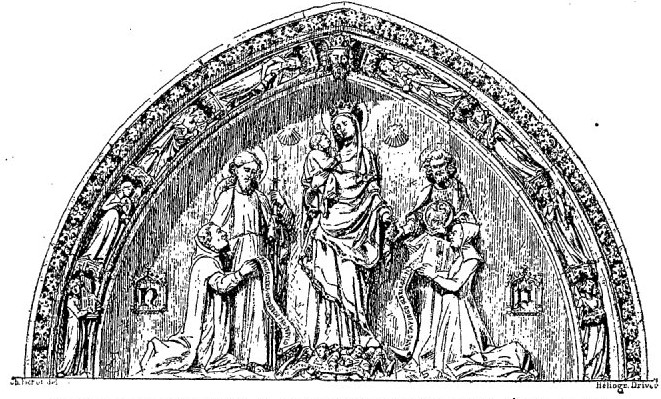
There may also be a connection between Flamel’s memorial and a relief of the Legend of the Three Living and the Three Dead that the Duke of Berry had installed in 1408 above one of the portals of the church of the Holy Innocents, which Flamel himself frequented. Flamel himself appeared with his wife Pernelle on a relief above a portal of the church of Saint Jacques de la Boucherie that he commissioned in 1389 (fig.5). Also worth mentioning is the Danse macabre mural at the cemetery of Saints Innocents, painted between August 1424 and Lent 1425, which was long attributed to the Duke of Berry although recent research suggests instead the Duke of Burgundy as the patron. The transi plaque, which was probably commissioned before 1418 by Flamel himself, predates the creation of this famous Danse macabre by just a few years.
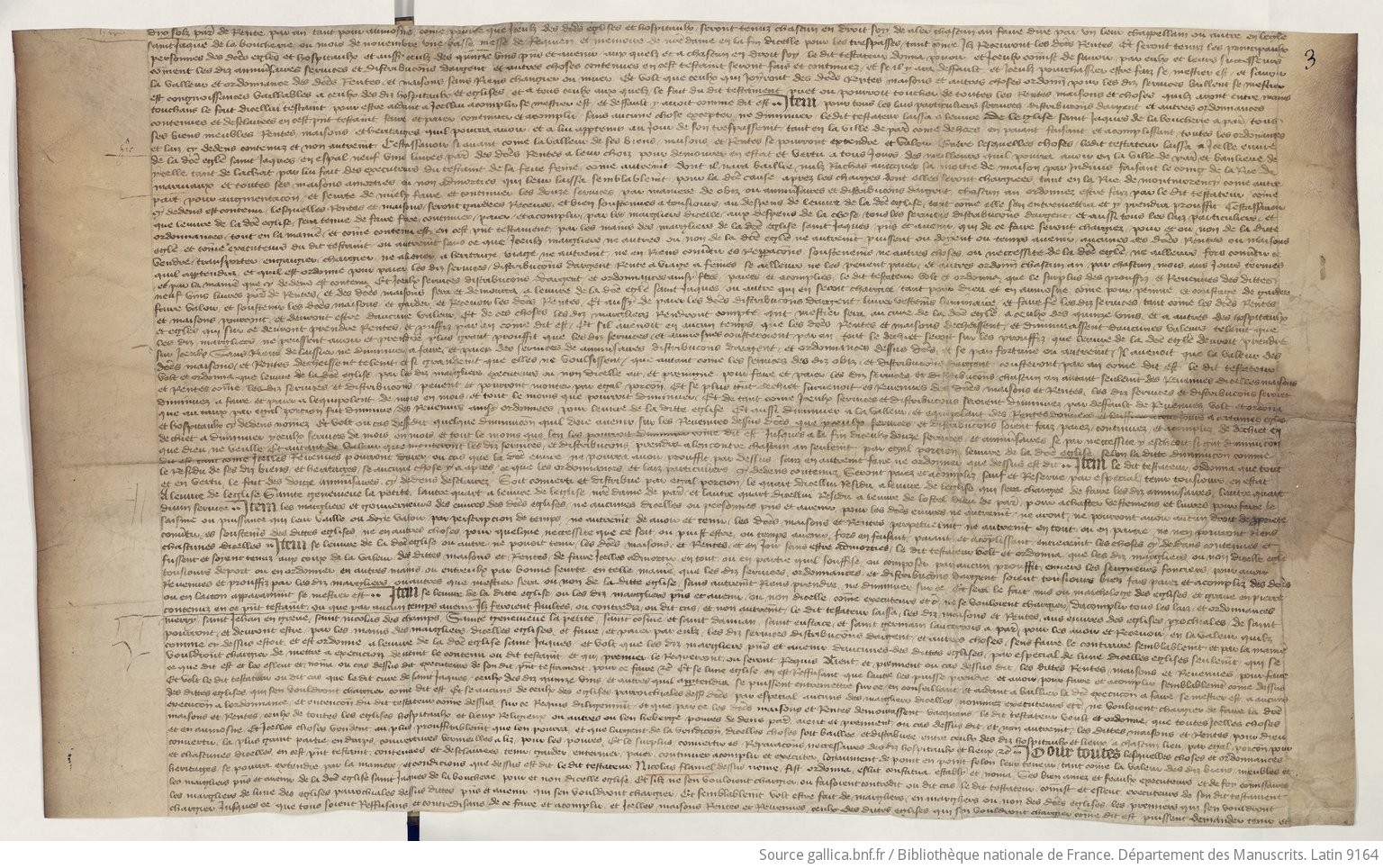
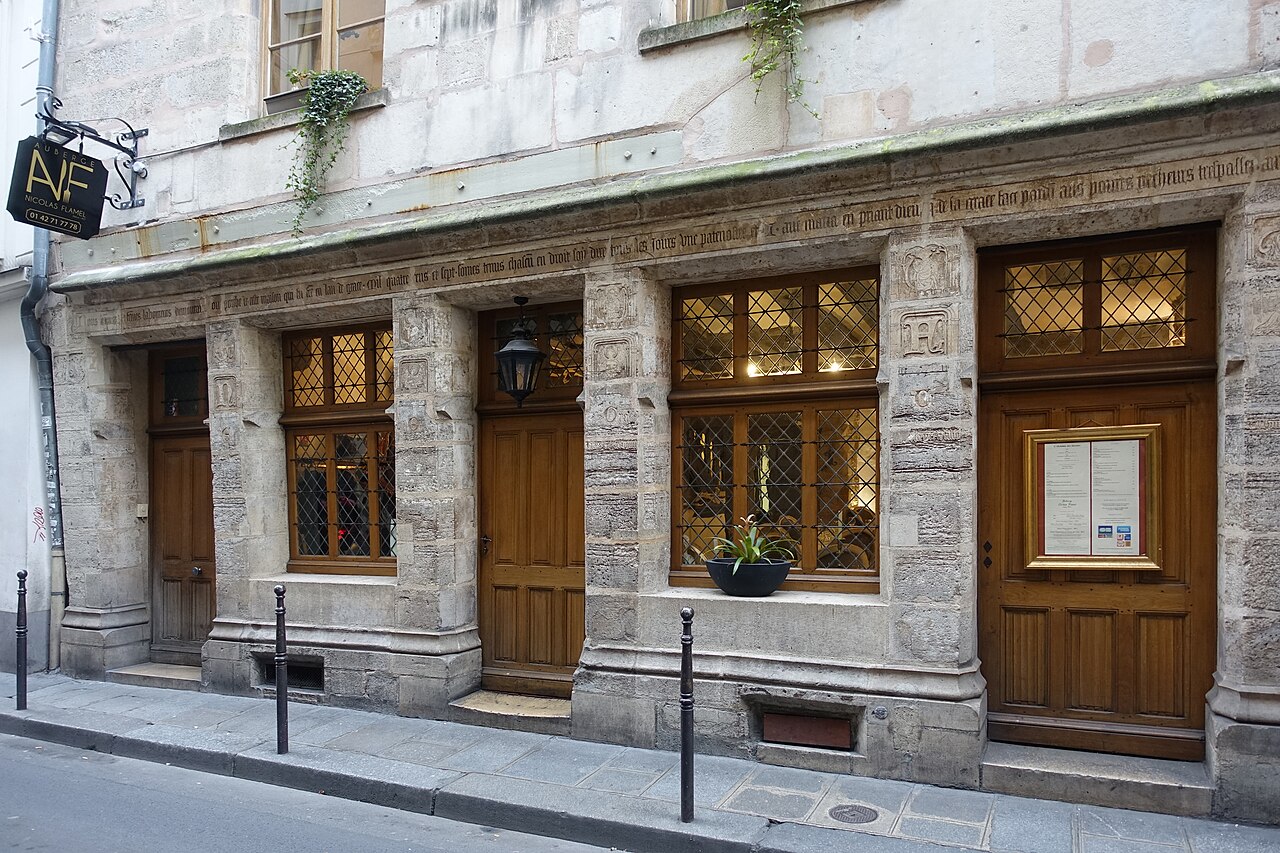
Flamel made multiple memoria provisions, which is also evident from his lengthy testamentary provisions. Four wills by him are known today, one of which dates from 22 November 1416 (Paris, BnF, ms. lat. 9164, fig. 6). A second unpublished one was recently discovered among the records of the Quinze-Vingts hospital to which he had made bequests in his will (Paris, National Archives, QV/A/25, nr 1461 – Fonds ancien de l’hôpital des Quinze-Vingts). The house that Nicholas Flamel commissioned after his wife’s death in 1397 to shelter the homeless exists to this day as an auberge at 51 rue de Montmorency (fig. 7).
Flamel’s memorial illustrates the tensions and paradoxes of flamboyant funerary art, poised between the expression of social success and self-affirmation, and that of a distinctly Christian, penitential humility. The plaque ultimately serves a dual purpose: the salvation and the memory of Nicolas Flamel. Its fortuitous survival ensures at least the latter.
Anne Lafran,
Dynamiques patrimoniales et culturelles (DYPAC),
Université Paris-Saclay
(Translation: Sophie Oosterwijk)
Further reading:
Claude Gagnon, Nicolas Flamel sous investigation (Le loup de Gouttière, 1994).
Anne Lafran, ‘Mourir en bourgeois de Paris. Analyse de l’épitaphe de Nicolas Flamel’, in Ilona Hans-Collas, Didier Jugan and Danielle Quéruel (eds), La Danse macabre des Saints-Innocents, 1425-2025. Sources, contexte, postérité, Actes du XXIe congrès international de l’association Danses macabres d’Europe (Éditions du Cherche-Lune, 2025), 155-171.
Mary Rouse, ‘The Well-Known Nicolas Flamel’, in Godfried Croenen and Peter Ainsworth (eds), Patrons, Authors and Workshops: Books and Book Production in Paris around 1400 (Peeters, 2006), 69-89.
Nigel Wilkins, Nicolas Flamel. Des livres et de l’or (Imago, 1993).
Gallery
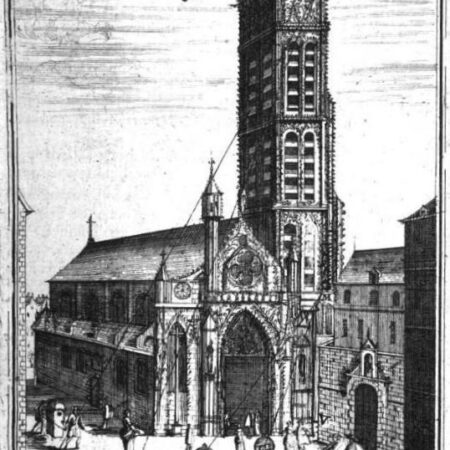 Fig. 1. The church of Saint-Jacques-de-la-Boucherie in Paris before its partial demolition, engraving published in Alain Manesson Mallet, La Géométrie pratique, II (Paris: Anisson, 1702), pl. LXXI, at https://fr.wikipedia.org/wiki/%C3%89glise_Saint-Jacques-de-la-Boucherie#/media/Fichier:St_Jacques_de_la_Boucherie.jpg
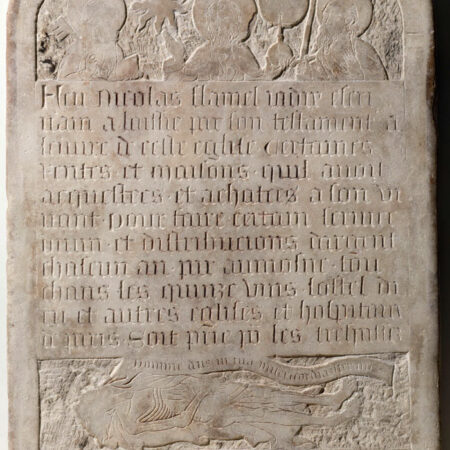 Fig. 2. Memorial plaque of Nicolas Flamel (d. 1418), formerly at the church of Saint-Jacques-de-la-Boucherie in Paris, now Musée national du Moyen Âge, Paris. Photo: © Musée de Cluny
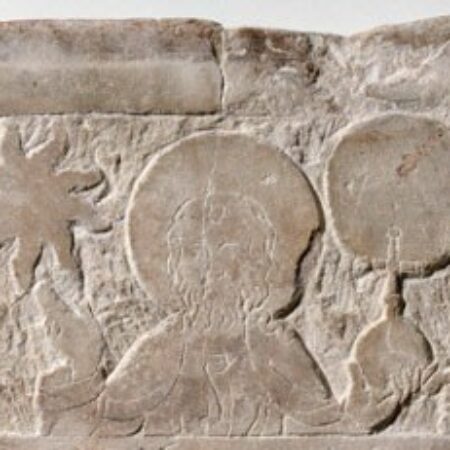 Fig. 3. St Peter, St Paul and Christ as the Salvator Mundi on the memorial plaque of Nicolas Flamel (d. 1418), formerly at the church of Saint-Jacques-de-la-Boucherie in Paris, now Musée national du Moyen Âge, Paris. Photo: © Musée de Cluny
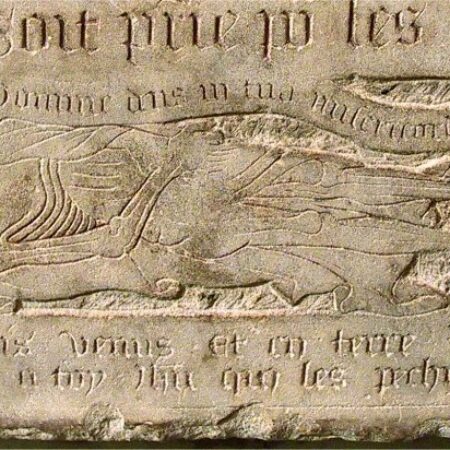 Fig. 4. Carved cadaver effigy on the memorial plaque of Nicolas Flamel (d. 1418), formerly at the church of Saint-Jacques-de-la-Boucherie in Paris, now Musée national du Moyen Âge, Paris. Photo: author, 2024
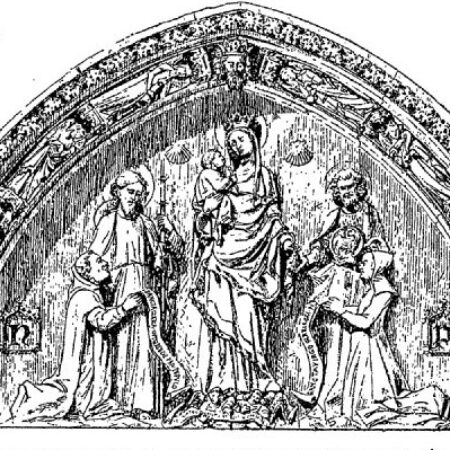 Fig. 5. Nicolas Flamel and his wife Pernelle kneeling on either side of the Virgin and Child, accompanied by St James the Greater and St John the Baptist, engraving (1761) of a relief commissioned by Flamel in 1389 for a portal of the church of Saint-Jacques-de-la-Boucherie in Paris, at https://fr.wikipedia.org/wiki/Nicolas_Flamel#/media/Fichier:Portail_de_Saint_Jacques_de_la_Boucherie.jpeg
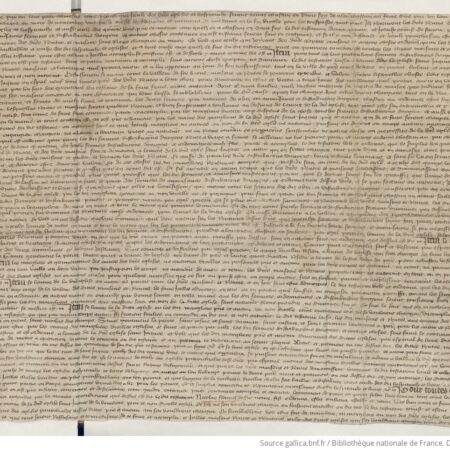 Fig. 6. Last will of Nicolas Flamel, dated 22 November 1416, Paris, BNF, ms. lat. 9164. Photo: © BnF
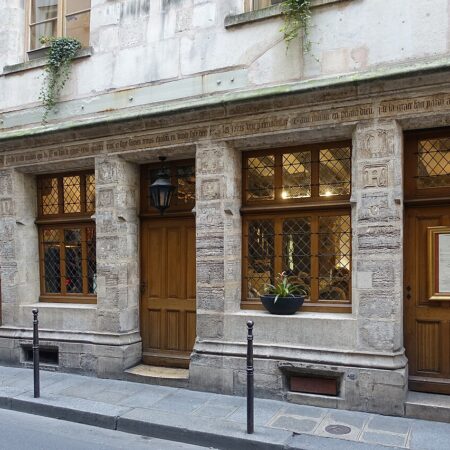 Fig. 7. Lower façade of the house now at 51 rue de Montmorency that Nicolas Flamel had built by 1407 as a shelter for the homeless. Photo: Guilhem Vellut (2017) at https://commons.wikimedia.org/wiki/File:Auberge_Nicolas_Flamel,_Paris_11_February_2017.jpg